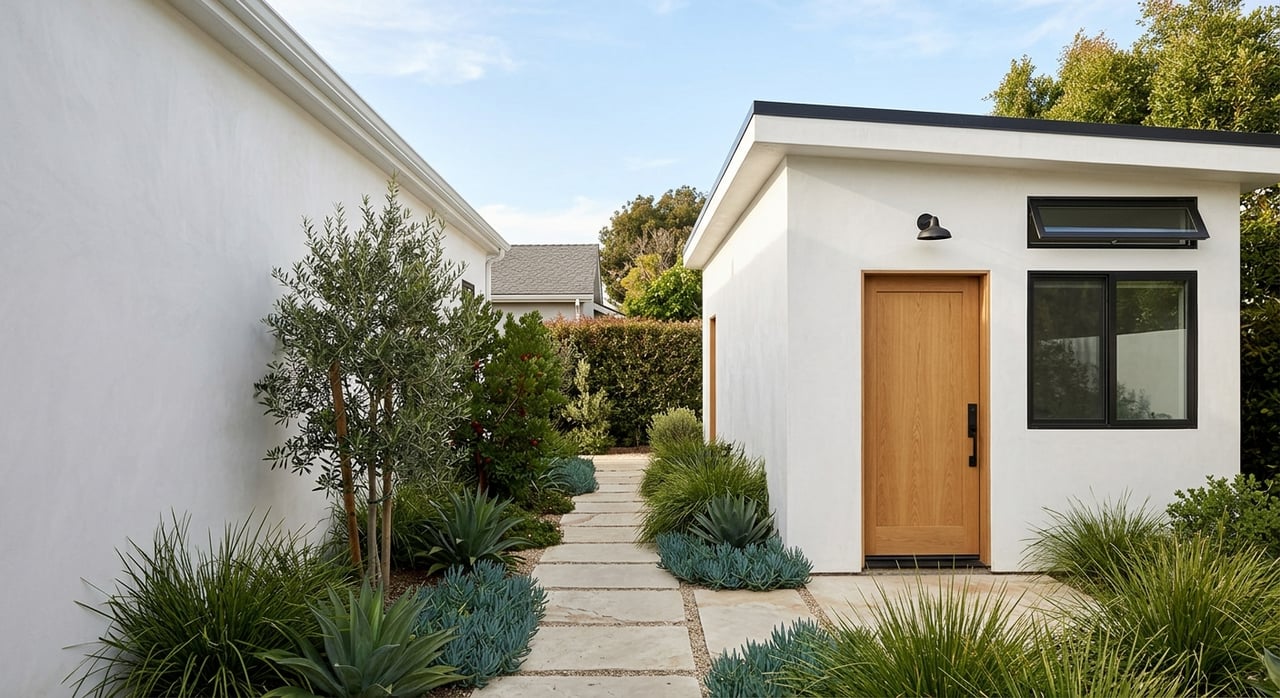
Long Beach ADU Rental Strategy for Your Property
If you own property in Long Beach, adding an ADU or rental unit may be one of the most practical ways to create flexibility, increase utility, and strengthen long-term value. In a city where rental demand is already high, this decision can serve several goals at once, from housing a family member to creating long-term rental income or improving resale appeal. The key is knowing what actually works in Long Beach today, what the rules allow, and where owners can get tripped up. Let’s dive in.
Long Beach is a strong market for smaller housing options. The city’s Housing Element reports that 60% of residents rent, 55% of renter households are housing cost-burdened, and rents increased by 20% from 2010 to 2020. The city also reports that 43% of all households are cost-burdened and more than 20,000 residents live in overcrowded conditions.
For you as a property owner, that matters because it points to real demand for independent living space. An ADU is not just a backyard project or a design upgrade. In Long Beach, it fits a market where additional housing options are already needed.
Long Beach is also not new to ADUs. The city reports approving 747 ADUs in 2025 and says it ranks among the highest per-capita ADU producers in California. That level of activity tells you two important things: local demand is there, and the city has real experience processing these projects.
Under current California rules, an ADU can take a few different forms. It may be a detached backyard unit, an attached addition, or a conversion of existing space like a garage or part of the main home. That gives you more than one path, depending on your lot, budget, and goals.
You may also hear about a JADU, or junior accessory dwelling unit. A JADU must be contained within a single-family home and is capped at 500 square feet. It is a smaller option, but for some properties it can be a smart way to add legal living space without building a separate structure.
One important rule to keep in mind is rental term length. State law says ADUs and JADUs must be rented for terms longer than 30 days. In other words, these units are meant for long-term housing use, not short-term rental turnover.
Long Beach currently applies state ADU law directly while its local ordinance is still being developed. The city says older local code references no longer apply, which means you should work from current city guidance and the California HCD handbook, not outdated online summaries or old municipal-code language.
Before you apply, the city instructs owners to confirm eligibility with the Planning Bureau. That step matters because site-specific factors can affect your path, especially if your property has an overlay or special review requirement.
If your property is in a historic district, you will need a Certificate of Appropriateness. If your property is in the coastal zone, you will need an administrative Local Coastal Development Permit before a building permit can be submitted. Neither issue means a project is impossible, but both can affect timeline and planning.
The approval process is designed to be objective rather than discretionary. According to the HCD handbook, the permitting agency must determine whether an ADU or JADU application is complete within 15 business days, and ministerial ADUs are exempt from CEQA. That can make the process more predictable than many owners expect, although coastal-zone properties may involve another layer of review.
Long Beach also offers a Pre-Approved Accessory Dwelling Unit Program. The city says qualifying pre-approved ADU plans and permit applications may be approved over the counter, and in some cases a building permit can be issued the same day after approval.
That does not mean every project is instant or identical. The city also notes that the program is undergoing changes, so you should confirm the current process before relying on a specific timeline. Still, for owners who want a more streamlined route, pre-approved plans can be worth serious consideration.
The right setup usually depends on your lot, your budget, and what you want the unit to do for you. Some owners want privacy and a strong long-term rental setup. Others want a flexible guest space, office, or multigenerational living option that can support resale later.
Here is a simple way to think about the main options:
| ADU Type | Best Fit For | Key Advantage |
|---|---|---|
| Detached ADU | Owners with yard space who want separation | More privacy for both units |
| Attached ADU | Owners expanding from the main house | Often efficient use of existing structure |
| Garage or interior conversion | Owners seeking lower site complexity | Reuses existing space |
| JADU | Single-family owners wanting a smaller addition | Lower footprint and smaller scale |
In many Long Beach cases, garage conversions and interior conversions stand out because they can reuse existing site value. The state describes ADUs as relatively affordable compared with new multifamily construction because they do not require land acquisition, major new infrastructure, structured parking, or elevators.
Cost is usually the first question, but feasibility often matters just as much. A project may look promising on paper, then change once you factor in permits, site conditions, utility work, layout limitations, and review requirements.
That said, several current rules can improve the math. One of the biggest is fee treatment. According to the HCD handbook, an ADU of 750 square feet or less is exempt from local impact fees, special-district fees, and water-corporation impact fees. A JADU of 500 square feet or less is also exempt.
School fees can matter too. ADUs and JADUs under 500 square feet are not subject to school impact fees, while larger units can be charged proportionally. If you are trying to control project cost, size planning can have real financial consequences.
Parking is another area where many owners assume the rules will be stricter than they are. The HCD handbook says parking cannot be required for a JADU, and parking exemptions apply to ADUs in several common situations, including when the unit is within one-half mile walking distance of public transit, in a historic district, or created within the primary home or an accessory structure.
Lot standards also offer more flexibility than many people expect. The handbook says lot coverage and floor area ratio limits cannot block an ADU of at least 800 square feet with four-foot side and rear setbacks. It also says that converting part of the primary residence or an existing accessory structure into an ADU is not subject to unit-size requirements.
Some Long Beach owners already have a back unit, converted garage, or bonus space that was built years ago without full permits. That can create problems during a sale, refinance, or appraisal, especially when a unit is being presented as rental space.
Long Beach says that, as of January 1, 2025, certain unpermitted ADUs and JADUs constructed before 2020 may be legalized through the building-permit process. If your property falls into that category, it may be worth exploring whether the unit can be brought into legal status rather than marketed as informal extra space.
This matters because legal status often affects value as much as square footage. A unit that is documented, permitted, and compliant is generally easier to explain to buyers, appraisers, and lenders.
Many owners ask whether an ADU adds value. The short answer is yes, it can, but not always in a simple dollar-for-dollar way. The market tends to reward utility, legality, design quality, and rental usefulness together.
FHFA’s California analysis found that the median appraised value of properties with ADUs rose from $550,000 in 2013 to $1.064 million in 2023. For properties without ADUs, the increase was from $405,000 to $715,000 over the same period. Annualized growth was 9.34% for properties with ADUs versus 7.65% for properties without them.
That does not mean every ADU produces the same return. A well-designed, permitted unit that supports long-term rental use is usually a stronger resale story than an unpermitted bonus space with unclear history. In Long Beach, where coastal and historic overlays can also affect compliance, documentation matters.
If you are adding an ADU, think beyond construction and into the full ownership picture. Financing and appraisal treatment can shape both your budget and your future exit strategy.
Fannie Mae says ADUs can be financed through standard purchase or refinance loans, HomeStyle Renovation, Construction-to-Permanent financing, and in some cases HomeReady loans that can count ADU rental income. Fannie Mae also says an appraisal must describe the ADU and analyze its effect on value or marketability.
That appraisal point is important. If a unit is noncompliant with zoning, that must be disclosed and supported with comparables. In practical terms, a clean paper trail can make financing and resale smoother.
You should also expect tax implications when new construction is completed. The California State Board of Equalization says completed new construction is generally an assessable event, and the added value from the improvement can trigger supplemental tax bills in addition to the annual property tax bill. That does not make an ADU a bad investment, but it should be part of your planning.
Before you build, get clear on what success looks like for you. Are you trying to create long-term rental income, make room for family, improve future resale positioning, or legalize an existing unit? Each goal can point to a different project scope and a different risk-reward profile.
In Long Beach, the strongest ADU decisions usually come from matching the project to the property and the exit plan. A smaller, efficient unit may offer better return than an oversized build. A legalization strategy may create more value than brand-new construction on the wrong lot.
If you are thinking about adding an ADU or rental unit, it helps to look at the decision through both a homeowner lens and a resale lens. The right plan is not just about what you can build. It is about what will be useful, compliant, marketable, and worthwhile for your specific property.
When you want a practical strategy for your lot, timeline, and long-term goals, connect with Tyler Rogina to map out the smartest next step.
Stay up to date on the latest real estate trends.
By Tyler Rogina, Broker Associate | Rogina Group at Compass | September 10, 2026
By Tyler Rogina, Broker Associate | Rogina Group at Compass | September 4, 2026
By Tyler Rogina, Broker Associate | Rogina Group at Compass | September 4, 2026

A local look at home prices, housing, parking, commuting, and what it’s like to live in Long Beach’s Washington School neighborhood.

A closer look at the public art, walking trails, and everyday experiences that make Civic Center Park one of Newport Beach's most distinctive neighborhood amenities.
Rooted in family values and driven by purpose, Rogina Group operates with a philosophy that success means more than numbers. It is about impact, relationships, and building a life you are proud of.
ROGINA GROUP
6460 Pacific Coast Hwy Ste 225 Long Beach, CA 90803 Tyler Rogina | CA DRE# 01925584