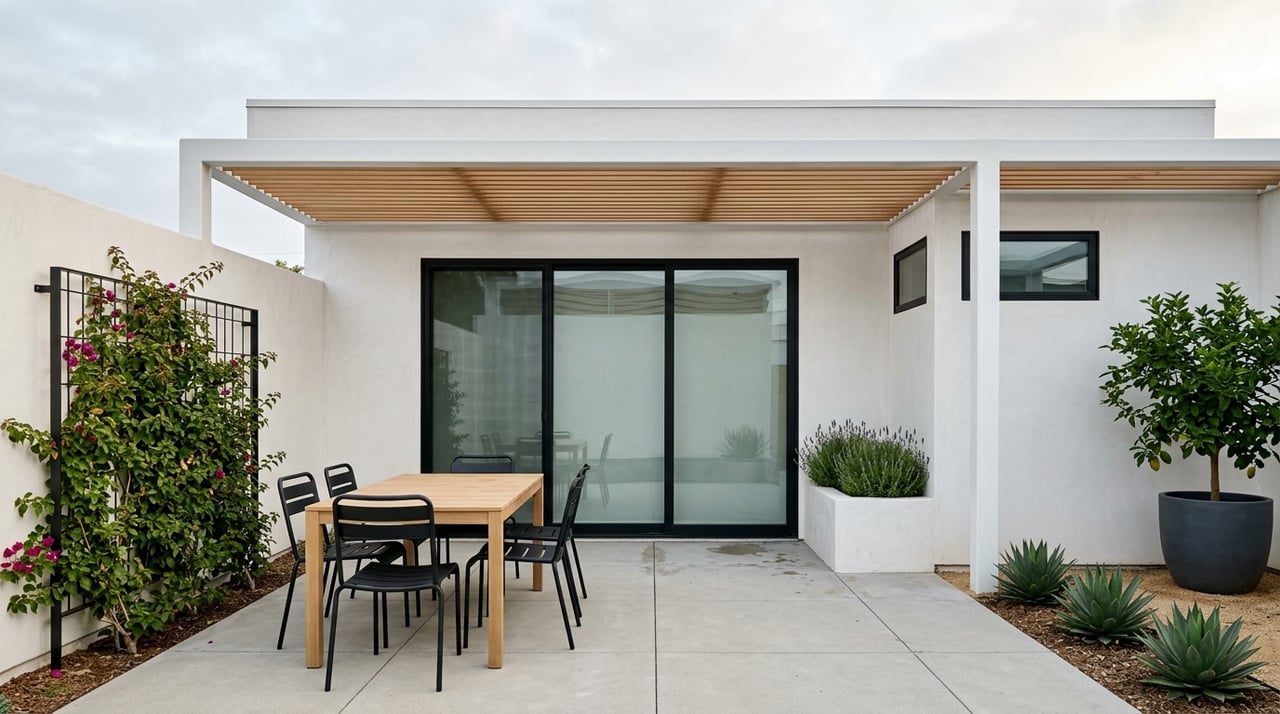
How Seasonality Impacts Selling A Home In Long Beach
If you are thinking about selling in Long Beach, timing matters, but probably not in the way many homeowners assume. Because Long Beach has a mild Mediterranean climate, weather usually plays a smaller role here than it does in colder markets. What tends to matter more is buyer behavior, listing competition, and how prepared your home is when it hits the market. In this guide, you will learn how seasonality affects pricing, speed, and leverage in Long Beach so you can make a more confident plan. Let’s dive in.
Long Beach does not usually see the kind of weather disruptions that shape selling seasons in snow-heavy parts of the country. The city describes its climate as mild, with dry summers and cool winters, which helps keep the market active throughout the year, even if activity levels shift seasonally. You can review the city’s climate context in the Long Beach Natural Hazard Mitigation Plan.
That said, a mild climate does not mean all months perform the same. In the Los Angeles metro, buyer demand still tends to strengthen in spring, especially as households try to move before summer. According to Zillow’s 2026 Los Angeles metro timing analysis, the strongest listing window is the last two weeks of April, when sellers could see a 2.5% premium, or about $25,300, on a typical home.
Historical market data supports the usual winter-to-spring pickup. In Los Angeles metro, California Association of REALTORS data showed median time on market improving from 37 days in January 2025 to 34 days in February 2025 and 28 days in March 2025. Over the same period, the unsold inventory index moved from 4.3 months in January to 3.7 months in March, signaling a tighter, more competitive spring market. You can see this broader trend in the California Association of REALTORS market release.
The pattern also showed up in early 2026, even with a slower start to the year. CAR reported that in Los Angeles metro, median time on market was 41 days in January 2026 and improved to 36 days in February 2026, while the unsold inventory index eased from 4.6 months to 4.3 months. That month-to-month improvement suggests that as the market moved closer to spring, conditions became more favorable for sellers. Those figures are outlined in the January 2026 CAR release.
Long Beach is active, but not so fast that timing becomes irrelevant. Realtor.com’s Long Beach market overview shows 882 active listings, a $739,000 median listing price, 43 median days on market, and a 100% sale-to-list ratio as of March 2026. That tells you buyers are still engaging, but sellers should not assume any listing will move quickly without the right strategy.
A second data source shows a similar story with slightly different numbers. Redfin’s February 2026 Long Beach market page reported a $833K median sale price, 59 days on market, and 3 offers on average. While each platform uses its own methodology, both point to the same conclusion: seasonality can help, but pricing, condition, and presentation still carry a lot of weight.
If you have flexibility, the strongest historical window points to late April through May. Zillow’s metro-level model gives the biggest seasonal edge to the last two weeks of April in the Los Angeles area. That does not guarantee the highest possible sale price for every home, but it does suggest that spring can create a measurable tailwind.
This is the key mindset to keep in mind: seasonality is an advantage, not a substitute for preparation. A well-prepared home listed in a decent week can outperform a poorly positioned home listed in the so-called perfect week. Timing matters most when it works together with smart pricing, strong visuals, and a launch plan built around your home’s specific buyer pool.
Many sellers worry that missing spring means waiting a full year. In Long Beach, that is often not necessary. Winter and early-year listings are generally slower based on regional market data, but the city’s mild climate means your home is not battling snowstorms, frozen landscaping, or severe weather-related showing disruptions.
In other words, off-season does not mean off-market. If your move is driven by a job change, a purchase timeline, a family transition, or an investment decision, selling in winter can still make sense. You may simply need a sharper pricing strategy and a more intentional launch plan to stand out when buyer traffic is lighter.
One of the biggest mistakes sellers make is assuming there is one citywide rule for timing. In reality, neighborhood-level conditions can vary quite a bit. Realtor.com’s current data shows 33 days on market in North Long Beach compared with 56 days in Downtown Long Beach, with Bixby Park at 53 days and SEADIP at 46 days.
That variation matters because seasonality interacts with local supply, price point, and buyer demand. A home in one part of Long Beach may benefit more from waiting for peak spring demand, while another may perform well any time of year if inventory is limited and the home is positioned correctly. This is why local pricing and absorption trends should shape your timing decision more than broad headlines alone.
Seasonality can improve your odds, but it is rarely the deciding factor by itself. In most Long Beach sales, these factors have a bigger day-to-day impact on results:
A home that starts too high can lose momentum in any season. Even in spring, buyers respond best when the price matches current competition and market conditions. The goal is not to test the market for as long as possible. The goal is to create enough interest early to strengthen your negotiating position.
Buyers notice deferred maintenance, dated finishes, and incomplete prep no matter what month you list. If your home is clean, repaired, and visually cohesive, you give buyers fewer reasons to hesitate. That can matter just as much as launching during a stronger seasonal window.
Photos, staging, and the first week on market shape how buyers perceive value. In a market like Long Beach, where pace can vary by neighborhood and price bracket, polished presentation helps your listing compete whether inventory is rising or falling. Strong marketing does not replace market conditions, but it can help you capture more of the available demand.
Spring often brings more buyers, but it can also bring more sellers. If several similar homes are coming to market at the same time, you need a plan to stand out. In some cases, listing slightly before the peak wave of inventory can be a smart move if your home is fully ready.
If you are deciding when to list, this framework can help:
The right question is not simply, “What is the best month to sell?” A better question is, “Given my home, my timeline, and current competition, when can I launch from the strongest position?” That is where a more strategic process makes a difference.
If you are planning a sale in Long Beach, it helps to build backward from your ideal listing date. That may include pre-list repairs, light updates, staging, photography, and pricing analysis. When those pieces are coordinated well, you are better able to take advantage of stronger seasonal demand when it shows up.
Seasonality is real in Long Beach, but it is not one-size-fits-all. The most successful sellers usually combine good timing with disciplined preparation and a clear go-to-market plan. If you want a customized strategy for your timeline, neighborhood, and home type, Tyler Rogina can help you map out the right next step.
Stay up to date on the latest real estate trends.
By Tyler Rogina, Broker Associate | Rogina Group at Compass | September 10, 2026
By Tyler Rogina, Broker Associate | Rogina Group at Compass | September 4, 2026

By Tyler Rogina, Broker Associate | Rogina Group at Compass | September 4, 2026

A local look at home prices, housing, parking, commuting, and what it’s like to live in Long Beach’s Washington School neighborhood.


A closer look at the public art, walking trails, and everyday experiences that make Civic Center Park one of Newport Beach's most distinctive neighborhood amenities.
Rooted in family values and driven by purpose, Rogina Group operates with a philosophy that success means more than numbers. It is about impact, relationships, and building a life you are proud of.
ROGINA GROUP
6460 Pacific Coast Hwy Ste 225 Long Beach, CA 90803 Tyler Rogina | CA DRE# 01925584